
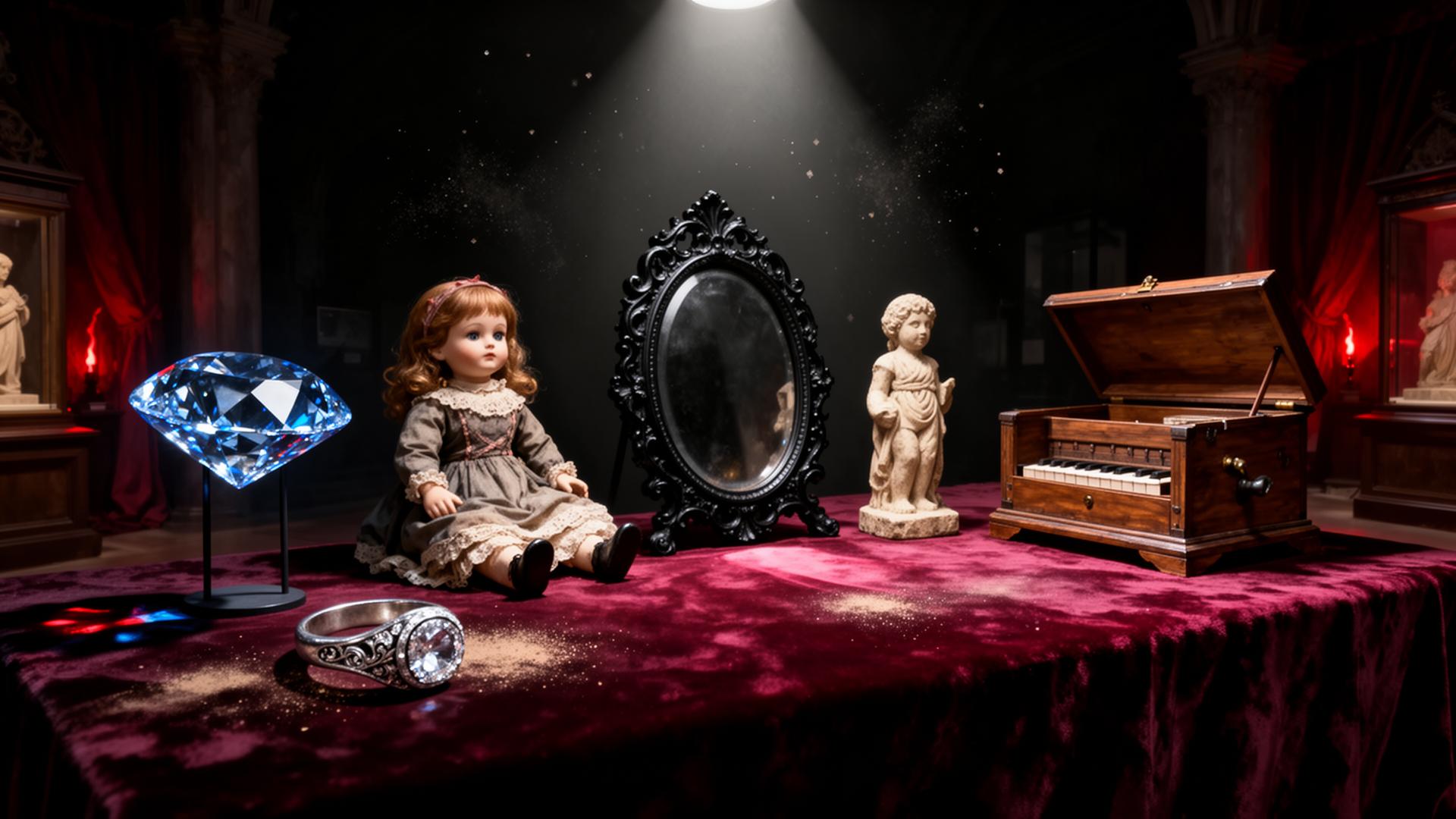
A curse is a story that refuses to end with the person who spoke it. Sometimes the curse is a real social mechanism — a feud, a stolen relic, a hereditary disease that travels with the loot. Sometimes it is a coincidence pattern that a journalist found after the fact and a public was happy to keep alive. We are not going to pretend we can tell you which is which for all twenty-five. We are going to tell you the story honestly, point at what the skeptics found, and let the rest sit where it sits.
These twenty-five are grouped in five buckets of five: royal dynasties, tombs and digs, jewels and objects, stages and houses, and the personal curses that attached themselves to a man, a car, a screenplay, or a song.
I. Royal & Dynastic Curses (1–5)
1. Tecumseh's Curse — the American presidents elected in years ending in zero
The legend says the Shawnee leader Tecumseh, or his brother the Prophet Tenskwatawa, cursed William Henry Harrison after the Battle of Tippecanoe in 1811: every president elected in a year ending in zero would die in office. Harrison (1840) died of pneumonia a month in. Then Lincoln (1860), Garfield (1880), McKinley (1900), Harding (1920), FDR (1940), Kennedy (1960). Reagan (1980) was shot and survived. The pattern broke clean with Reagan, and again with George W. Bush (2000). What a statistician will tell you, calmly, is that with a small sample and an unforgiving filter the cluster is not as improbable as it sounds. What a Shawnee historian will tell you is that no contemporary source records the curse — it shows up in print decades later. Both can be true.

2. The Kennedy Curse
Three brothers shot, one in Dallas in 1963, one in Los Angeles in 1968, and Joseph Jr. killed flying a bomber in 1944. A sister lobotomised, a sister killed in a plane crash, a son killed in a plane crash off Martha's Vineyard in 1999, a nephew skiing into a tree, another overdosing. Cardinal Cushing, the family priest, was asked once if the family was cursed and reportedly said, no, they were ambitious and they were unlucky. Both at industrial scale tends to look like a curse from the outside.

3. The Curse of Talakadu — the Wodeyars of Mysore
In 1612, the widowed queen Alamelamma was pursued by Wodeyar troops for the temple jewels she carried. She is said to have flung the jewels into the Cauvery at Talakadu and cursed three things — that Talakadu would become a desert of sand, that the nearby town of Malangi would become a whirlpool, and that the Wodeyar kings would never have natural-born heirs. Talakadu is, in fact, buried under sand dunes today. And from 1612 to 1974, the Mysore throne passed by adoption five times because reigning kings died without biological sons. The geology has a perfectly good shifting-river explanation. The succession is harder to wave off.

4. The Romanov Curse — Rasputin's letter
In late 1916, Rasputin reportedly wrote to the Tsarina that if he were killed by peasants, the Romanovs would reign for centuries — but if killed by nobles or by the family's own kin, none of them would survive two years. He was killed in December 1916 by a circle of aristocrats led by Prince Yusupov, a relative by marriage. The Tsar, the Tsarina, and all five of their children were executed in a basement at Yekaterinburg in July 1918. Nineteen months. The letter itself is contested by historians — its provenance is shaky — but the timing of what it described is exactly right.
5. The Grimaldi Curse of Monaco
A 13th-century legend has a Flemish woman, raped by a Grimaldi ancestor (Rainier I), cursing the family: "Never will a Grimaldi find true happiness in marriage." Eight centuries of Monaco's ruling house have provided enough divorces, scandals, and an iconic 1982 car crash that killed Princess Grace to keep the legend in circulation. A royal family being unhappy in love is not, by itself, evidence of anything — but the family itself has, at times, taken the curse seriously enough to mention it.

II. Tomb & Archaeological Curses (6–10)
6. The Curse of Tutankhamun
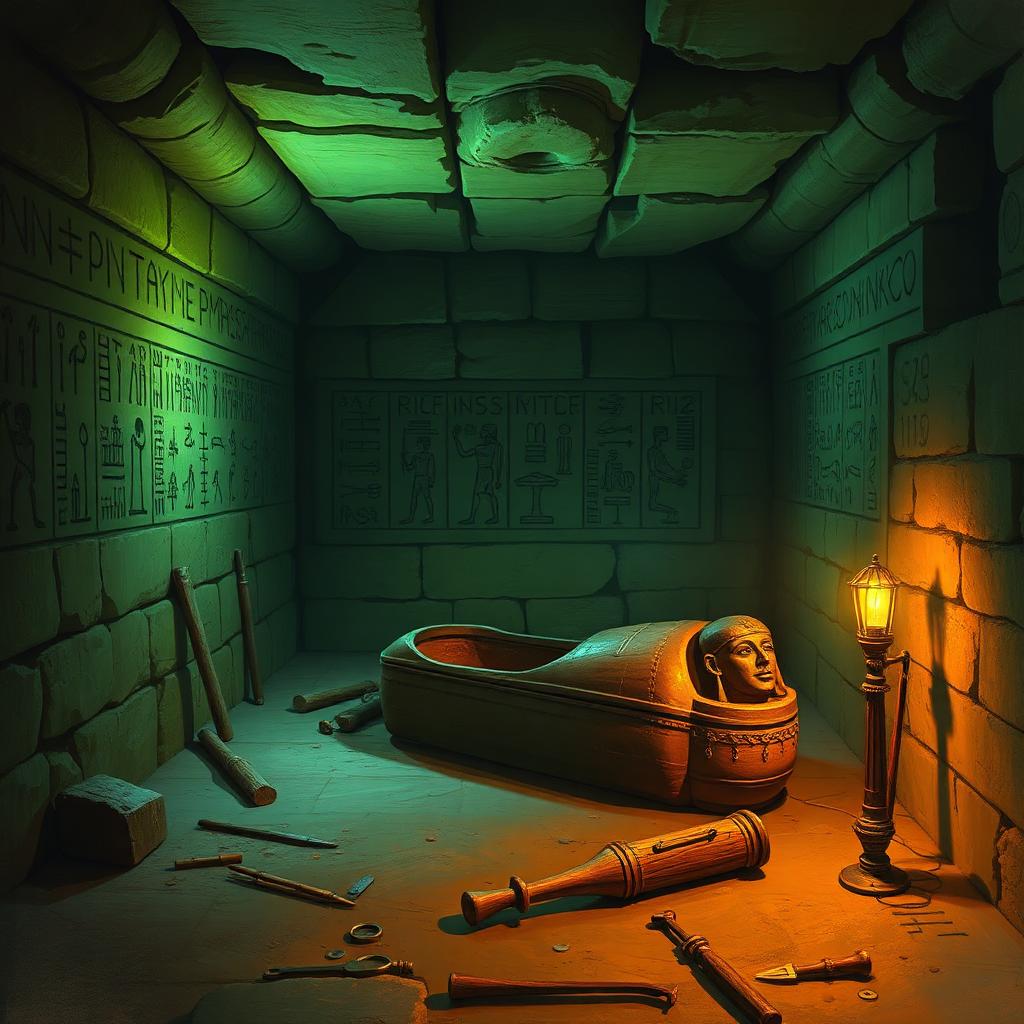
Howard Carter opened the tomb in November 1922. Lord Carnarvon, the financier, died in Cairo on 5 April 1923 from an infected mosquito bite. The British press, led by an enthusiastic Marie Corelli prediction the month before, did the rest. The full body count attached to the curse over the next decade — usually given as around twenty — includes people with the most tangential connection to the tomb. The two people most exposed, Carter himself and Lady Evelyn Herbert (Carnarvon's daughter, who entered first), lived another seventeen and sixty years respectively. Carter died in 1939 at sixty-four. A 2002 study in the BMJ compared the mortality of westerners present at the opening against a matched cohort and found no difference. The curse is, as a measurable thing, not there. As a story, it is one of the best ever told.
7. The Curse of Timur — Samarkand, June 1941
Soviet anthropologist Mikhail Gerasimov opened the tomb of Timur (Tamerlane) in Samarkand on 19 June 1941 to reconstruct his face. An inscription inside reportedly read, "When I rise from the dead, the world shall tremble." Three days later, on 22 June, Operation Barbarossa began — Germany invaded the Soviet Union. Timur's remains were reburied with full Islamic rites in November 1942; the Soviets won the Battle of Stalingrad shortly after. The coincidence is so on-the-nose that it gets retold every time the war does. The inscription's wording is, depending on the source, embellished.

8. The Curse of Ötzi the Iceman
The 5,300-year-old mummy found in the Alps in 1991 has been linked to seven deaths among people connected to the find — Helmut Simon, who discovered him, fell to his death in the same mountains; the head of the recovery team died of a heart attack hours after Simon's funeral; the forensic pathologist who first examined the body died in a car crash; and so on. Seven is a small number out of the hundreds of people who handled Ötzi. But the deaths are real and the cluster is published.

9. The Curse of Casimir IV — Wawel Cathedral, 1973
Polish archaeologists opened the tomb of King Casimir IV Jagiellon at Wawel Cathedral, Kraków, on 13 April 1973. Within a few years, fifteen of the team members had died, several of cancer and respiratory failure. The cause, finally identified, was Aspergillus flavus — a toxic mould thriving inside the sealed tomb that releases aflatoxin when disturbed. The same fungus has since been proposed as the explanation for several of Carnarvon's circle. This is the curse with a name and a Latin binomial.

10. The Unlucky Mummy — British Museum 22542
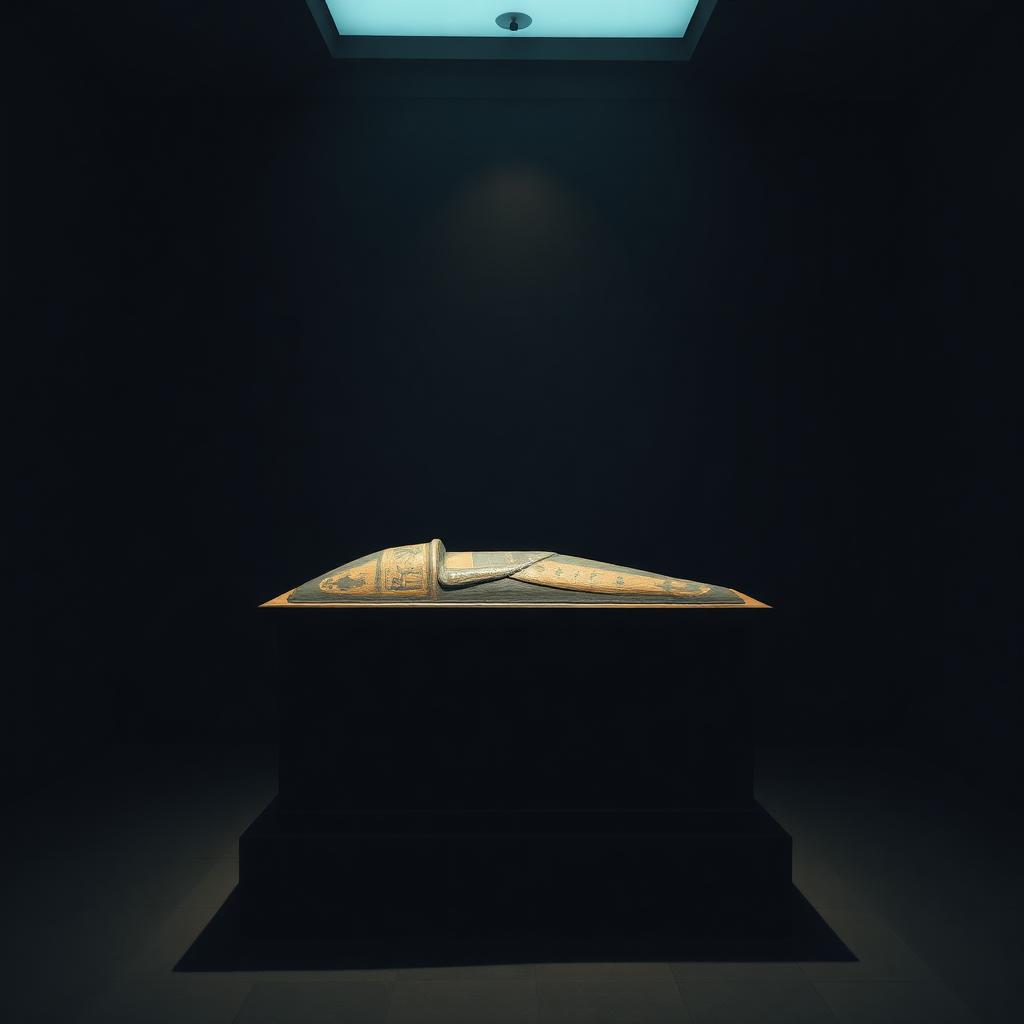
Not a mummy, in fact — the painted wooden lid of a coffin board of a priestess of Amun-Ra, donated to the British Museum in 1889. Owners and handlers in the 1880s reportedly suffered ruinous luck, lost limbs, and died young. A persistent legend says the artefact was loaded onto the Titanic in 1912. It was not — it has been in the museum continuously since 1889 — but the story is so good that several Titanic survivors swore they had seen it. A useful reminder that curses do not need actual proximity to do their work; rumour is sufficient.
III. Jewels & Objects (11–15)
11. The Hope Diamond
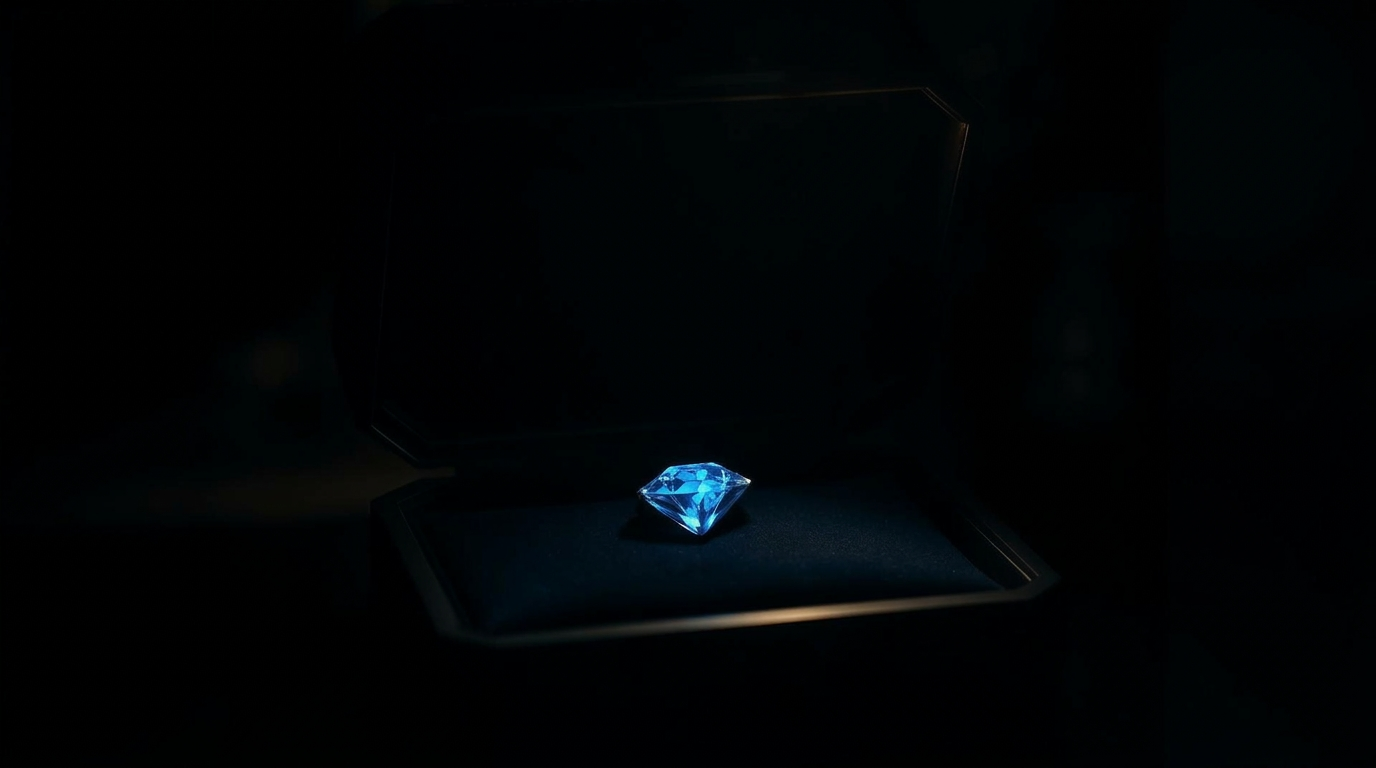
Said to have been pried from the eye of a Hindu temple statue (probably not), the 45-carat blue diamond passed through Louis XIV, Marie Antoinette, the Hope banking family, the Sultan Abdul Hamid II, and the American heiress Evalyn Walsh McLean, whose son died in a car accident, daughter overdosed, and husband ended in an asylum. Pierre Cartier, who sold the stone to McLean, almost certainly embellished its provenance to make the curse story stick. It has been at the Smithsonian since 1958 with no recorded misfortunes since.
12. The Koh-i-Noor — the curse of male wearers
A Hindu text recorded with the stone reportedly says: "He who owns this diamond will own the world, but will also know all its misfortunes. Only God, or a woman, can wear it with impunity." The list of male owners — Mughal emperors, the Shah of Persia, Afghan kings, Maharaja Ranjit Singh — is a list of betrayals, blindings, depositions, and violent deaths. Since arriving in Britain in 1849 it has been worn only by queens — Victoria, Alexandra, Mary, and the Queen Mother. Whatever one thinks of Britain's claim to the stone, the no-male-wearer rule has been observed without exception.

13. The Black Orlov — the Eye of Brahma
A 67-carat black diamond said to have been stolen from a statue of Brahma in a Pondicherry shrine. Three of its owners — including the Russian princess Nadia Vyegin-Orlov, for whom it is named, and an earlier dealer named J. W. Paris — are said to have died by leaping from tall buildings. The stone was eventually re-cut into three pieces, on the theory that breaking the curse meant breaking the stone. The recut pieces have not, to date, been associated with further deaths.

14. The Delhi Purple Sapphire
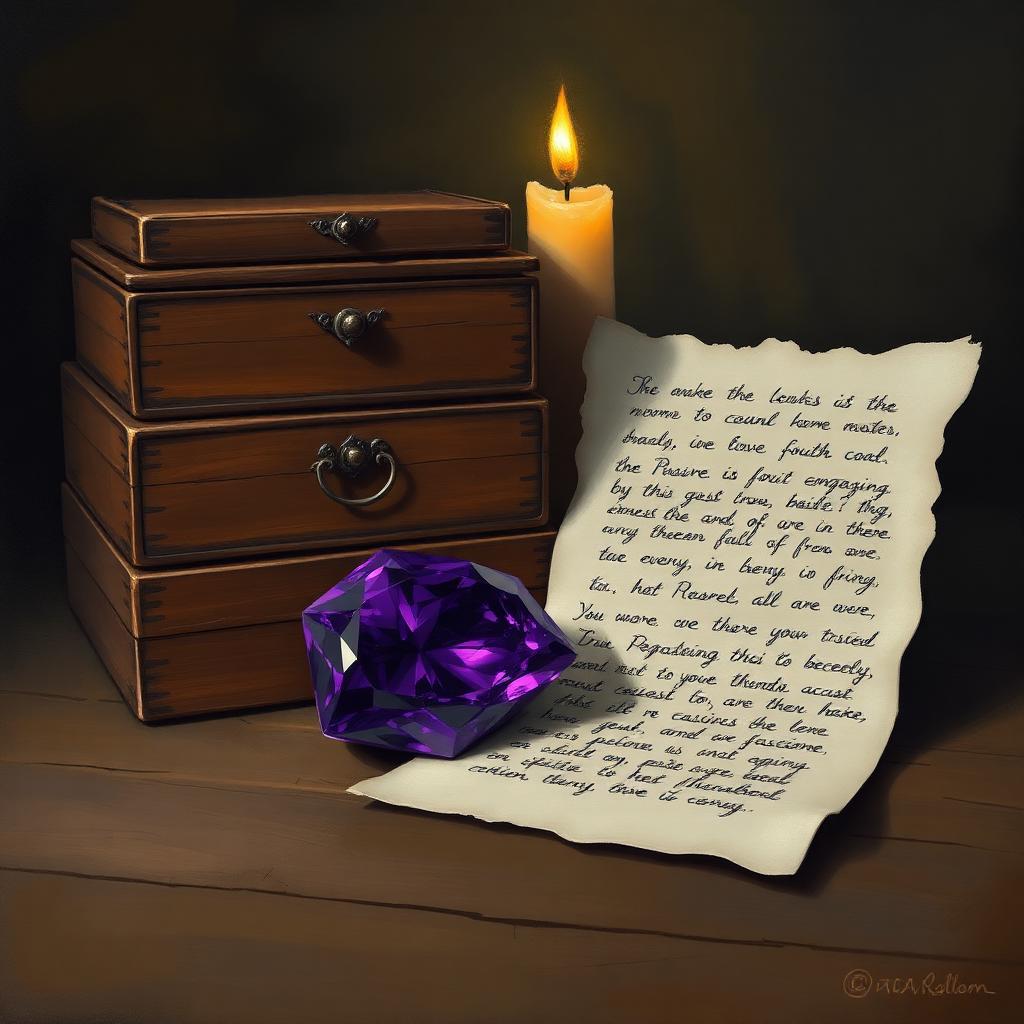
Looted from a temple of Indra during the 1857 uprising, the amethyst (it is not actually a sapphire) was brought to England by Colonel W. Ferris, whose family suffered ruin and illness. The next owner, the writer Edward Heron-Allen, declared it "accursed and stained with the blood and dishonour of everyone who has ever owned it," sealed it inside seven boxes with a written warning, and deposited it at the Natural History Museum in London with instructions that it not be opened until thirty-three years after his death. It is on display today. Nobody who has handled it since has reported anything.
15. The Basano Vase
A 15th-century silver vase from northern Italy, allegedly given to a bride on her wedding night; she was found dead clutching it. The vase was supposedly hidden away for centuries with a note saying, "Beware, this vase brings death." In the 1980s it resurfaced, sold to three successive owners who all died within months. The vase was reportedly turned over to the authorities and buried somewhere in a lead-lined casket. Its current whereabouts are unknown, which is convenient for the legend.
IV. Stages, Houses & Hexed Places (16–20)
16. The Scottish Play — the curse of Macbeth
Actors do not say "Macbeth" inside a theatre. They say "the Scottish play." The legend: Shakespeare lifted the witches' incantations from real covens, who cursed the play in return. The list of deaths and disasters in productions of Macbeth — from the boy actor playing Lady Macbeth dying on opening night in 1606, to riots, fires, and on-stage accidents across four centuries — is genuinely longer than for any other Shakespeare play. The boring explanation is that Macbeth has more fight scenes, more low lighting, and more sword work than the rest of the canon, and accidents follow. Theatres still take the taboo seriously enough that if you say the word, you are sent outside, told to spin three times, spit, and ask to be let back in.

17. The Crying Boy painting — Yorkshire, 1985
Mass-produced prints of a sentimental painting of a weeping child, sold across British homes in the 1960s and 70s. In September 1985, a Yorkshire firefighter named Peter Hall told The Sun that prints of the painting kept turning up undamaged in the gutted ruins of house fires, while everything around them was destroyed. The paper ran a campaign inviting readers to send in their prints to be ceremonially burned. Thousands did. The likely explanation, identified later by a researcher named Steve Punt, is that the prints were treated with a fire-retardant varnish and hung on a string that burned through, dropping them face-down on the floor where they survived. A perfectly mundane curse.

18. The Bell Witch — Adams, Tennessee, 1817–1821
The Bell family of Adams, Tennessee, were tormented for four years by what they called "Kate" — an invisible entity that spoke, sang, threw furniture, and attacked the daughter Betsy. John Bell, the patriarch, died in December 1820; a vial of poison was found near his bed, and the witch's voice was reportedly heard cackling that she had killed him. Andrew Jackson, then a general, allegedly visited and left after one night, saying he would rather fight the British at New Orleans again. Of all American hauntings, this is the only one in which a coroner's report was popularly attributed to a ghost.

19. The Amityville Horror house
On 13 November 1974, Ronald DeFeo Jr. shot his parents and four siblings in their beds at 112 Ocean Avenue, Amityville. Thirteen months later, the Lutz family moved in and lasted twenty-eight days before fleeing, with a now-famous list of phenomena — green slime, red-eyed pig in the window, voices, cold spots, a hidden "red room" in the basement. The Lutzes' lawyer later admitted, on the record, that he, the Lutzes, and the writer Jay Anson had "created the horror story over many bottles of wine." The DeFeo murders are real. The haunting is the most successful piece of New England wine-fuelled fiction of the twentieth century.

20. The Poltergeist film curse
Four cast members of the Poltergeist trilogy (1982–1988) died young: Dominique Dunne, twenty-two, strangled by an ex-boyfriend; Heather O'Rourke, twelve, from septic shock during emergency surgery; Julian Beck, sixty, of stomach cancer; Will Sampson, fifty-three, of post-operative complications. The film used real human skeletons on set, which is the detail most often cited. Two of the four deaths involve elderly actors in poor health and are not unusual; two are genuinely shocking. The cluster sits in the middle of the spectrum between coincidence and curse, which is exactly where the best ones live.

V. Personal & Pop-Culture Curses (21–25)
21. The Curse of the Bambino — Boston Red Sox, 1919–2004
The Red Sox sold Babe Ruth to the New York Yankees on 26 December 1919. The Sox had won five of the first fifteen World Series. They did not win another for eighty-six years. Generations of Boston fans grew up under what a sportswriter named Dan Shaughnessy formally christened, in 1990, the Curse of the Bambino. The 2004 Red Sox finally broke it by coming back from 0–3 against the Yankees in the ALCS — a thing no team had ever done — and sweeping the World Series. Sports curses live exactly as long as the drought, and not a day longer.

22. The Curse of the Billy Goat — Chicago Cubs, 1945–2016
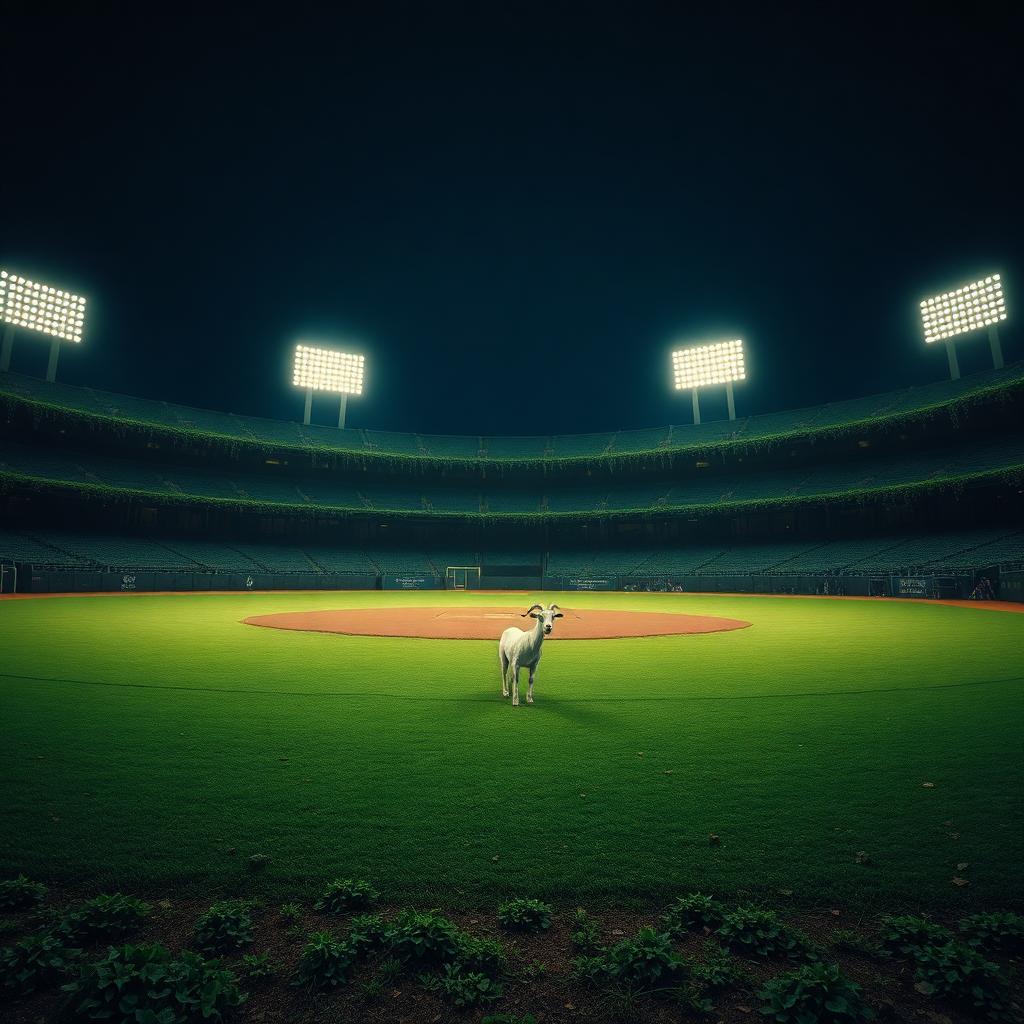
In Game 4 of the 1945 World Series, the owner of the Billy Goat Tavern, Billy Sianis, was asked to leave Wrigley Field because his pet goat smelled. He reportedly declared, "Them Cubs, they ain't gonna win no more." The Cubs lost the series and did not return to a World Series for seventy-one years. They finally won in 2016, after the city had spent decades parading goats around Wrigley in attempts at exorcism. Like the Bambino, the curse expired the moment the drought did.
23. James Dean's Little Bastard — the Porsche 550 Spyder
On 30 September 1955, James Dean was killed at twenty-four when his silver Porsche 550 Spyder, nicknamed Little Bastard, was hit head-on at an intersection in California. The wreck was bought by a customiser named George Barris, who reportedly watched it crush a mechanic's legs as it was being unloaded. Parts salvaged from the car were installed in two race cars; one driver was killed and the other badly injured in their next outings. The shell of Little Bastard then vanished in 1960 from a sealed train car while being shipped to an exhibition and has never been found. The story is almost entirely Barris's, told and re-told for decades; some of it is verifiable, some is showmanship. The disappearance is real.

24. The Curse of Atuk — the unproduced screenplay
An adaptation of Mordecai Richler's 1963 novel The Incomparable Atuk, about an Inuit man brought to Toronto. The film was developed for decades. Every comedian seriously attached to the title role died before production: John Belushi (1982), Sam Kinison (1992), John Candy (1994), Chris Farley (1997). Phil Hartman, who read the script and considered taking it, was murdered in 1998. The script has not been produced. Hollywood has a polite habit of declining to mention it.
25. The 27 Club
Brian Jones (1969), Jimi Hendrix (1970), Janis Joplin (1970), Jim Morrison (1971), Kurt Cobain (1994), Amy Winehouse (2011) — all dead at twenty-seven, all musicians at the top of their craft, most of the deaths drug-related. A 2011 BMJ study looked at the mortality rate of famous musicians at every age and found no real spike at twenty-seven — but the cluster of these specific six, in these specific decades, in this specific genre, was enough to convince a generation that the age itself was the curse. The pattern is real; the mechanism is mostly that very famous, very young, very chemically adventurous people are at high risk for several years on either side of twenty-seven, and the round number is where memory snags.

What the Twenty-Five Have in Common
Read straight through, four patterns repeat. First, the curse is almost always announced before the misfortunes — a Shawnee leader, a queen at a river, a monk in a letter, an inscription on a tomb. Second, the deaths most often cited are the ones with the cleanest narrative connection, and the survivors are almost always omitted. Third, the curse expires when somebody breaks it cleanly — the Red Sox win, the Cubs win, the tomb is reburied, the painting is burned. Fourth, the few cases with a found mechanism — Aspergillus in Casimir's tomb, fire-retardant varnish on the Crying Boy — quietly do more to explain the rest than any supernatural account ever has.
None of which is to say there is nothing here. The Wodeyars adopted heirs for three and a half centuries. The Romanovs died in a basement nineteen months after the man predicted it. The Little Bastard is still missing. A curse, in the end, is what we call a coincidence that refuses to lose its shape — and a few of these refuse harder than the rest.