The Garuda Purana is one of the eighteen Mahapuranas of Hindu tradition, presented as a profound dialogue between Lord Vishnu and his celestial carrier, Garuda. While many ancient texts focus primarily on the creation of the universe or the lives of deities, the Garuda Purana is unique in its detailed mapping of the metaphysics of death.
It acts as an esoteric guidebook for the soul's transition out of the physical body. It outlines the cosmic laws of karma, the geography of the afterlife, and the ultimate journey toward liberation, leaving an indelible impact on how life and death are understood in Eastern philosophy.
The Transition and the Immediate Afterlife
1. The Soul's Journey After Death
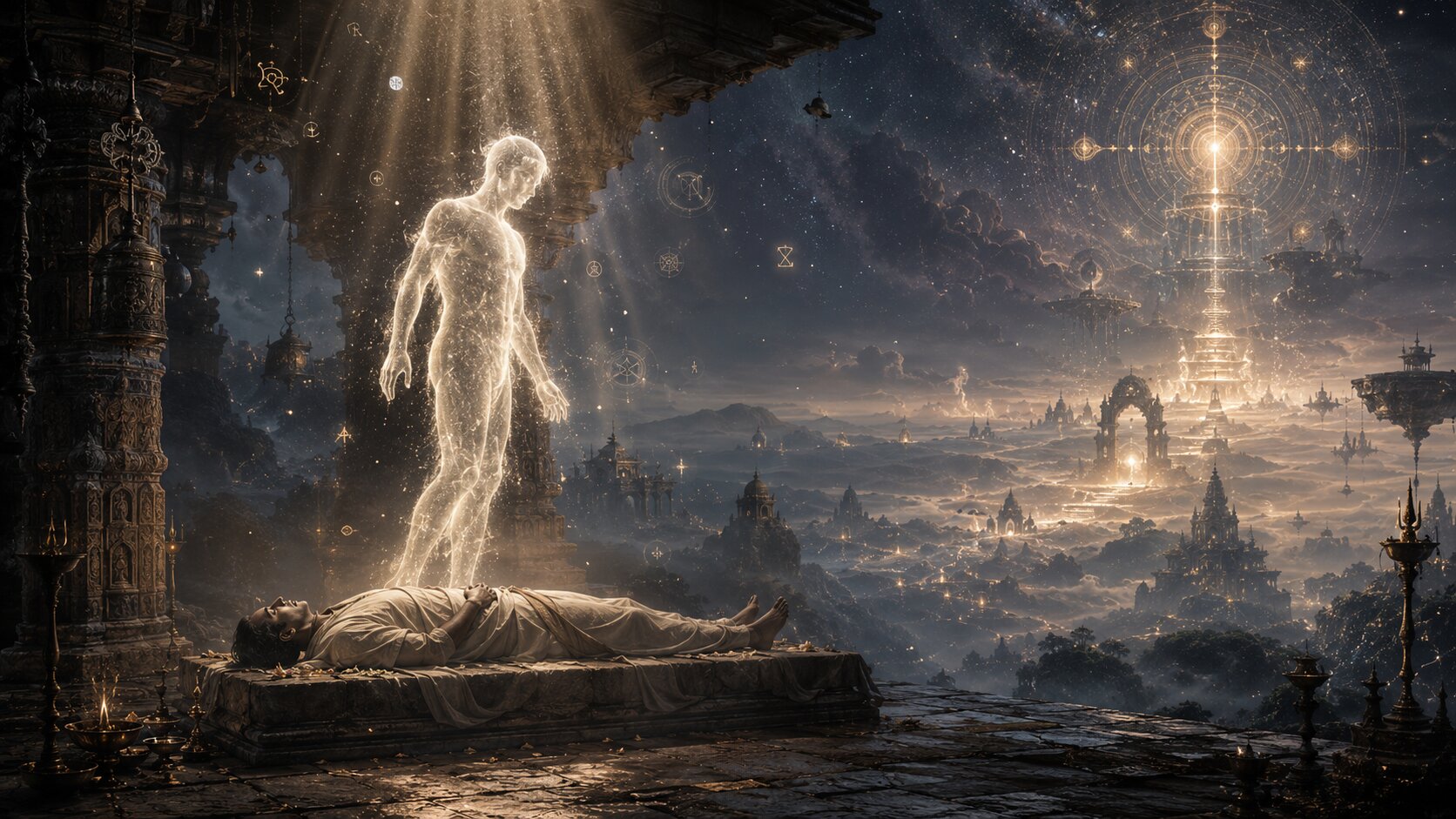
According to the text, the moment of death triggers a profound separation as the soul departs its physical shell. Stripped of its earthly identity, it assumes a subtle body (preta-deha) to begin an arduous journey across the cosmic subtle planes. The Garuda Purana details that this journey lasts roughly 47 days, during which the soul travels through terrifying terrains, encountering harsh climates and psychological mirrors of its past actions. This period serves as a liminal space, forcing the consciousness to detach from its earthly possessions, habits, and relationships before it can advance to any higher or lower realm of justice.
2. The Terrifying River Vaitarani
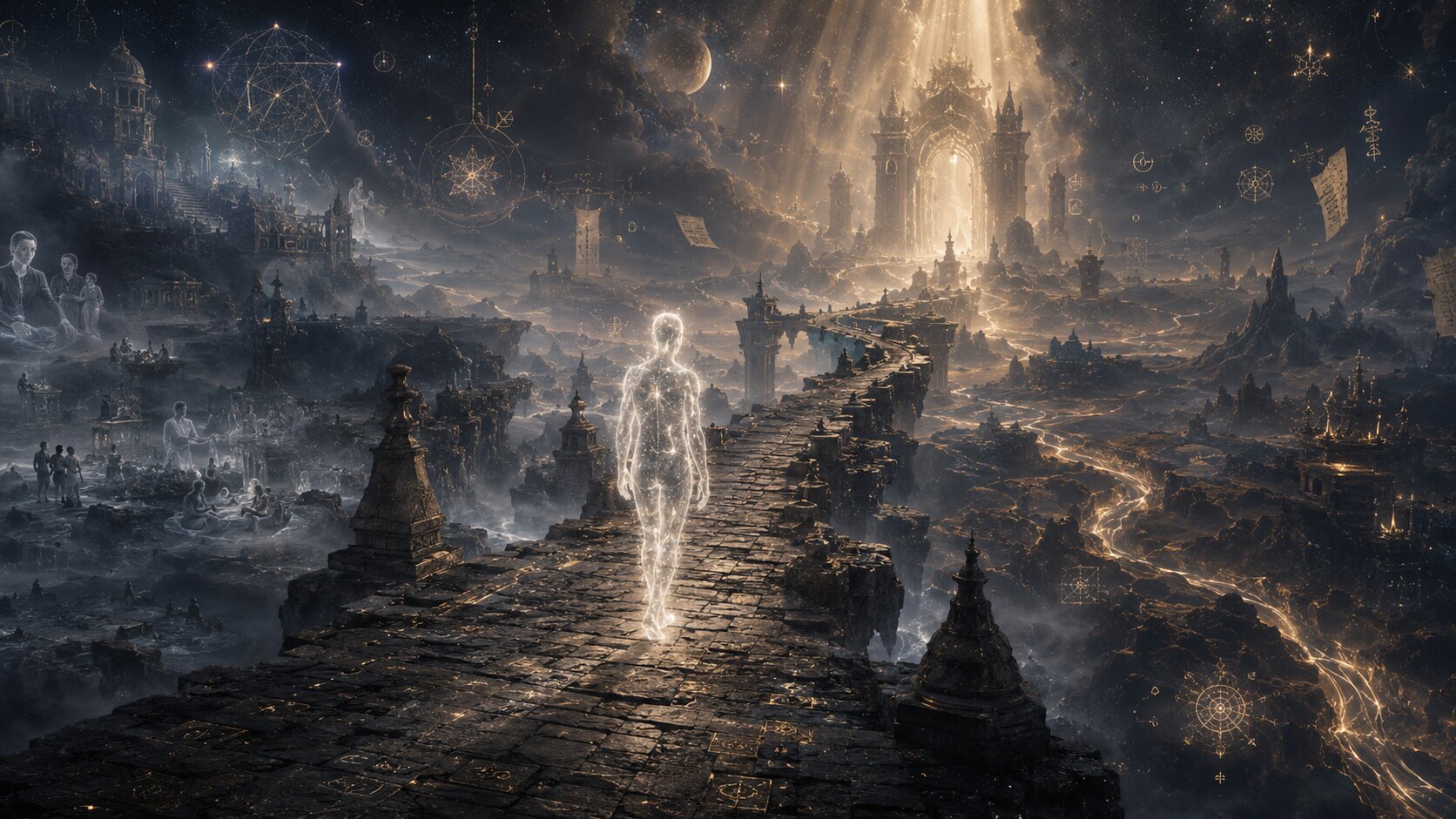
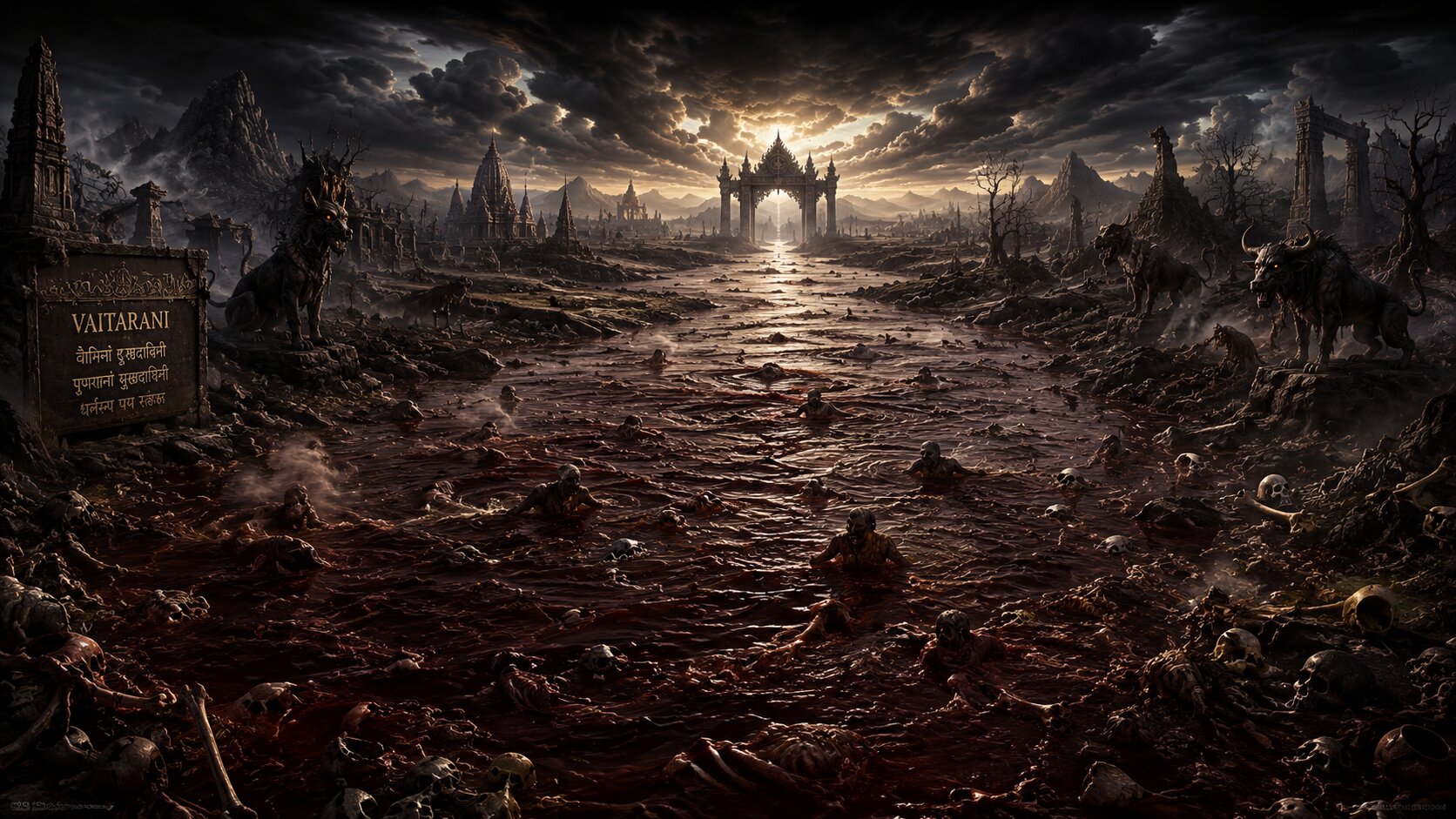
Perhaps the most dreaded geographical feature described in the afterlife is the River Vaitarani, a horrific barrier flowing between the mortal realm and the court of judgment. The text describes it not as water, but as a roiling torrent of blood, pus, bones, and toxic elements, guarded by fierce, predatory beasts. It is a literal manifestation of a soul's negative karma. While souls burdened with heavy sins find themselves drowning and suffering within its currents, those who practiced virtue and charity during their earthly lives find the river transforming, allowing them a safe and peaceful crossing.
3. The Dreaded Messengers of Yama
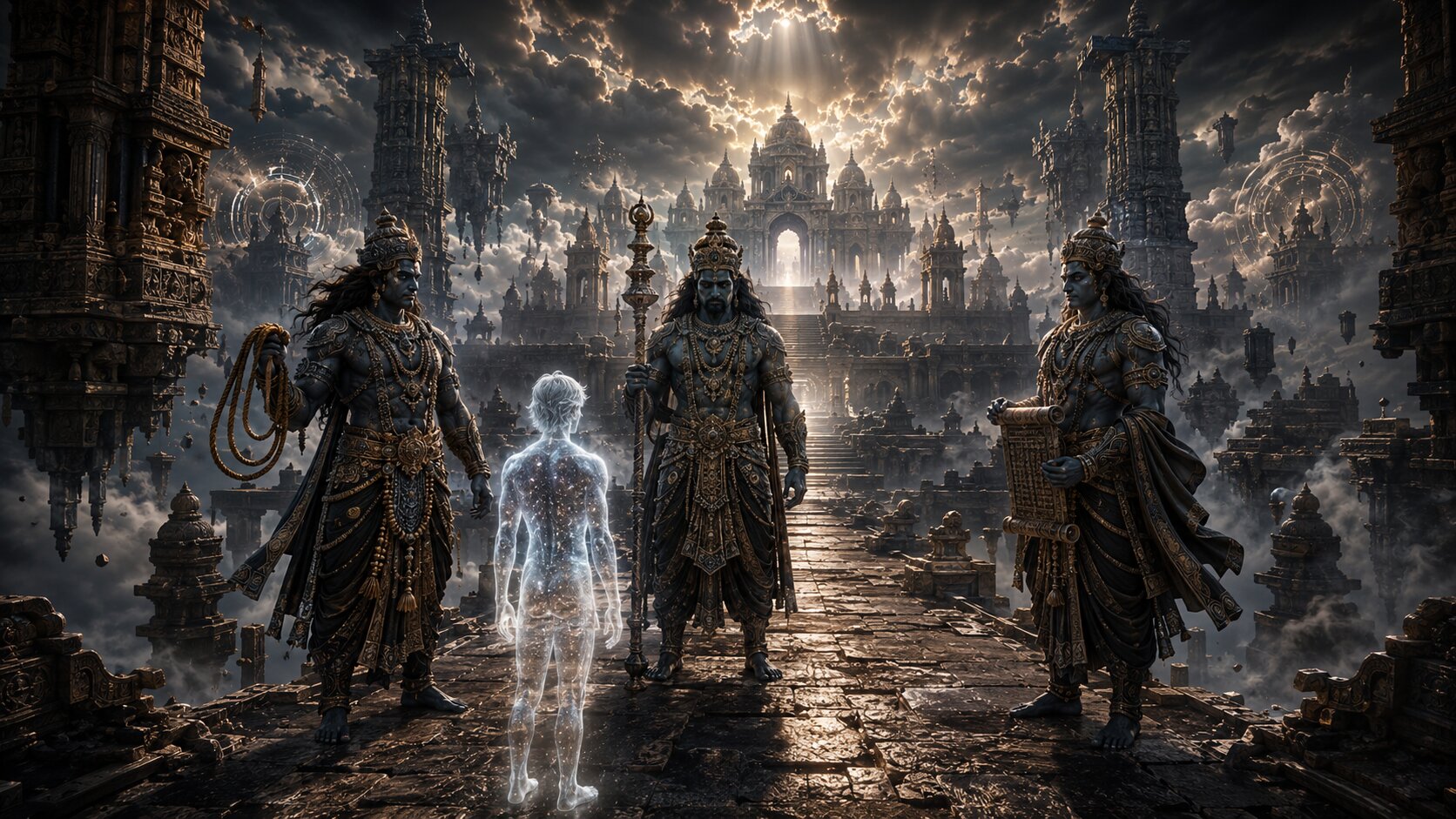
As the soul detaches from its physical body, it is met by the Yama Dutas — the stern, formidable messengers of Lord Yama, the god of justice. The text describes these entities as imposing figures designed to mirror the psychological state of the deceased. To a soul weighed down by vice, they appear terrifying and aggressive, forcibly binding and pulling the consciousness along the subtle pathways. Conversely, to a virtuous soul, they manifest as peaceful guides. Their primary function is not to torture, but to act as impartial cosmic bailiffs, ensuring that every soul safely reaches its appointed destination to face review.
The Cosmic Tribunal of Justice
4. The Supreme Court of Yama
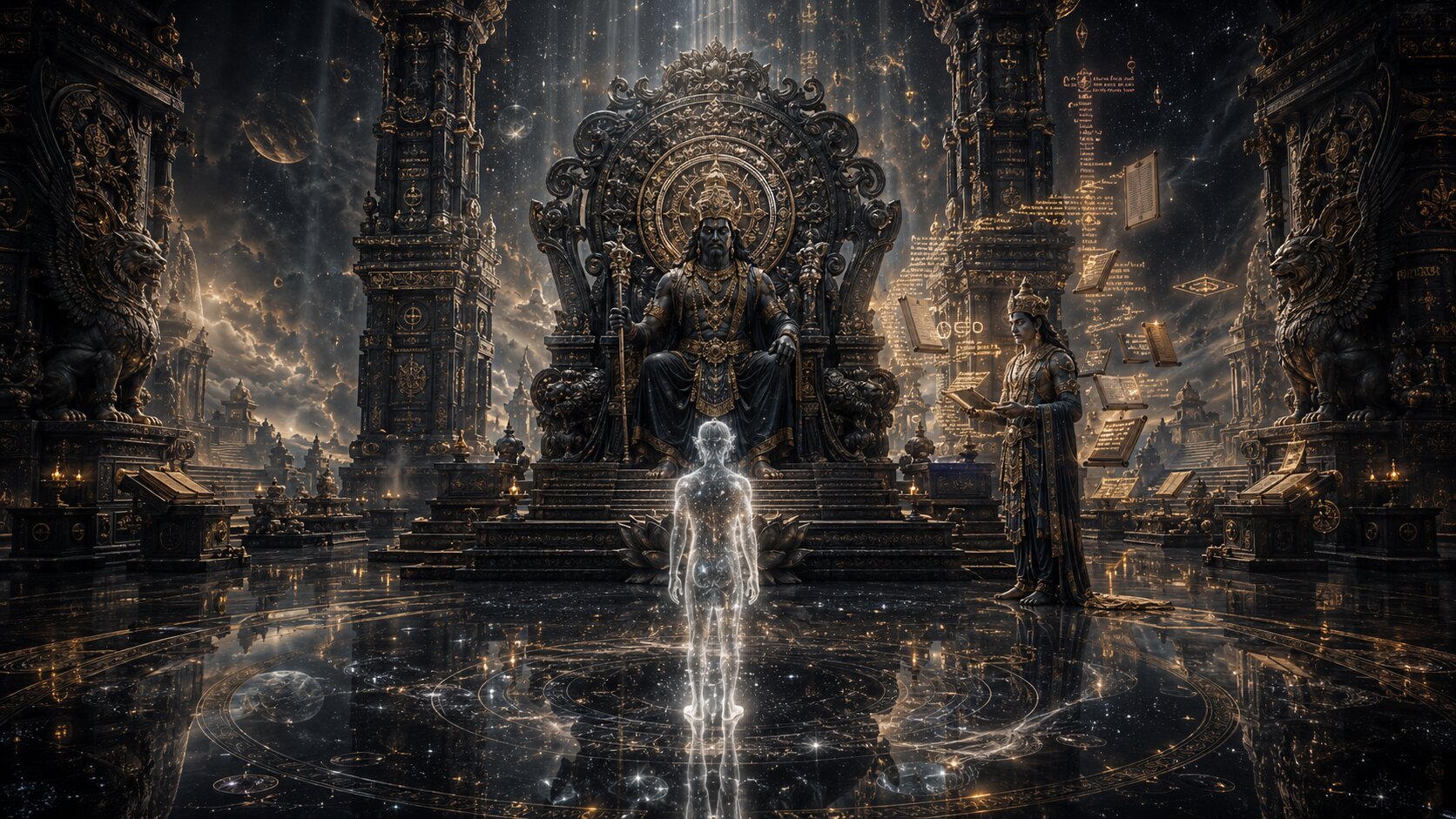
At the end of its initial journey, the soul arrives at the majestic and intimidating court of Lord Yama. This realm functions as a cosmic tribunal where divine justice is administered with absolute impartiality. There are no witnesses to call or lawyers to argue cases; the court operates on pure energy and truth. Here, the soul stands completely exposed, unable to hide its secret intentions, biases, or past deeds. Yama acts not out of malice or anger, but as the cosmic balancer (Dharmaraja), ensuring that the universal law of cause and effect is perfectly maintained for every individual consciousness.
5. Chitragupta: The Infinite Record Keeper
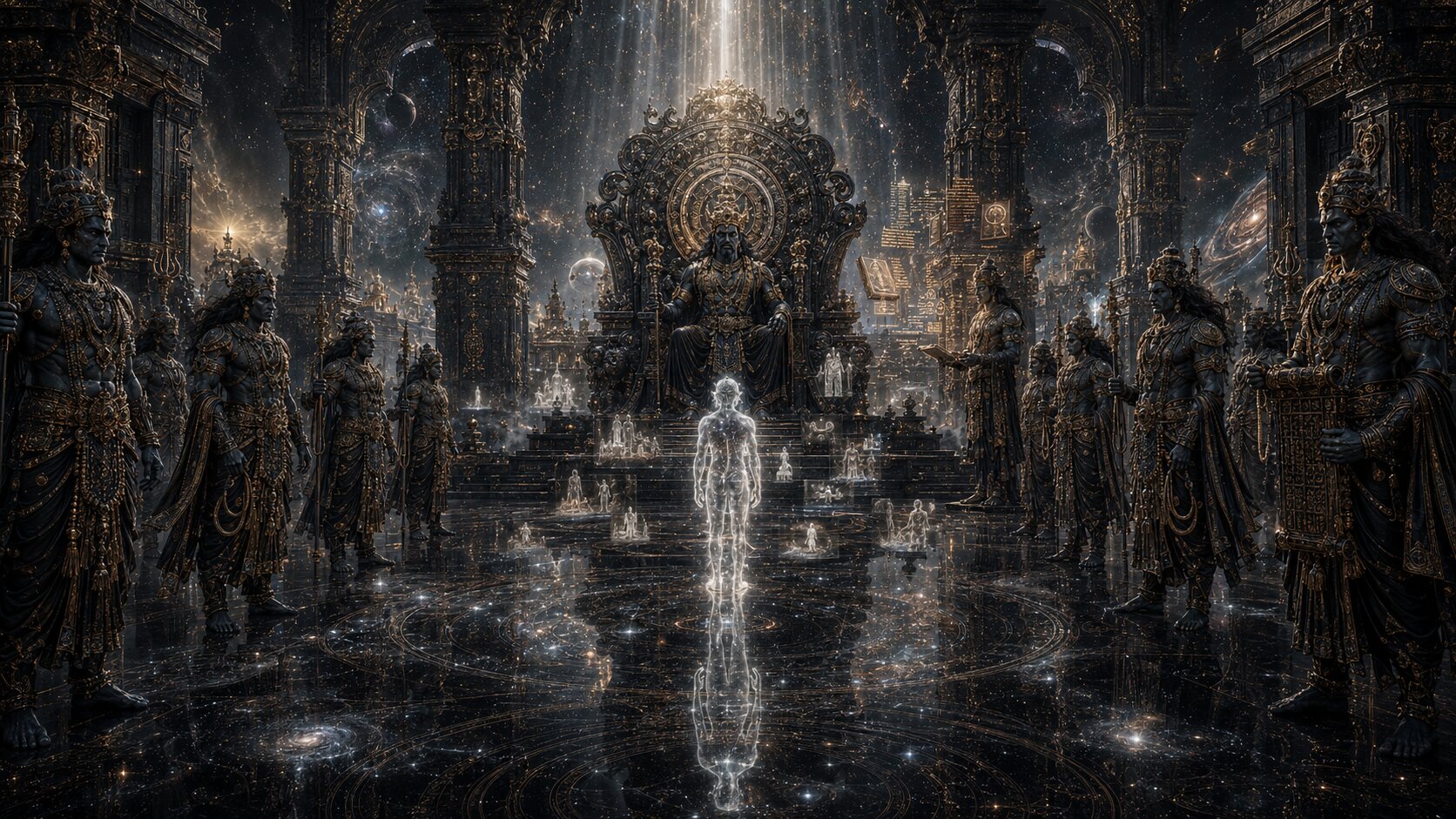
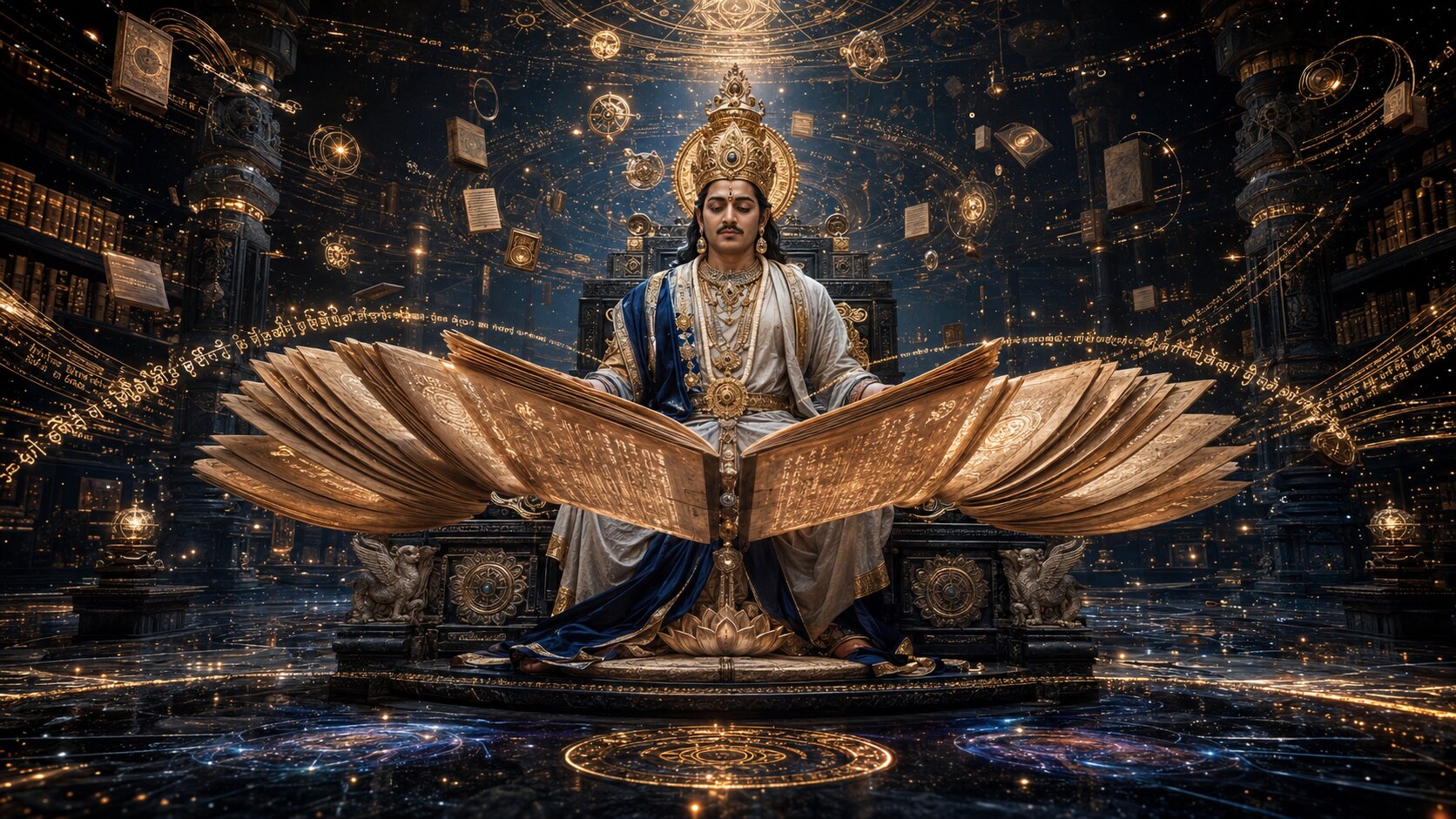
Sitting beside Lord Yama is Chitragupta, the divine scribe tasked with an astonishing bureaucratic feat: maintaining a flawless, uncorrupted ledger of every single thought, word, and action committed by every living being in the universe. Operating like an absolute cosmic database, Chitragupta reads from the Agrasaṃdhānī (the massive register of human deeds). In modern philosophical terms, this represents the Akasha, the energetic imprint that every choice leaves on the fabric of the universe, ensuring that no good deed goes unrewarded and no dark act remains hidden.
6. The Architecture of the Narakas
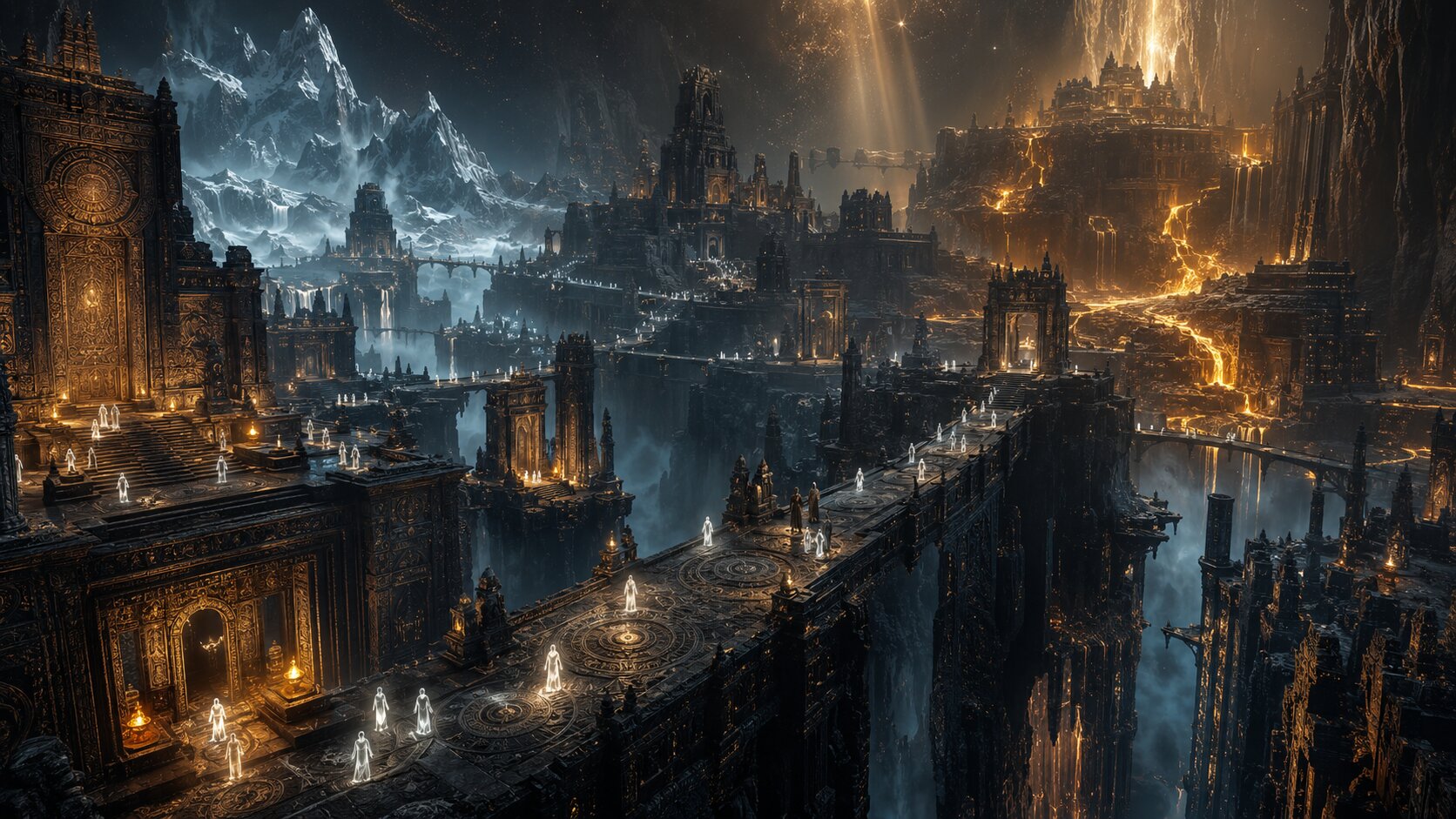
For souls whose ledgers show an abundance of destructive and malicious actions, the Garuda Purana maps out numerous distinct punitive realms known as Narakas. The text describes specific planes of suffering tailored to match the exact nature of the sin committed — such as realms for greed, violence, or deceit. Crucially, Hindu esotericism emphasizes that these hellish dimensions are not permanent places of eternal damnation. Instead, they function as intensive spiritual rehabilitation centers where the soul burns away its dense, negative karmic blockages through suffering before it can re-enter the cycle of evolution.
Restless Spirits and Lineage Bonds
7. The Metaphysical Mystery of Pretas
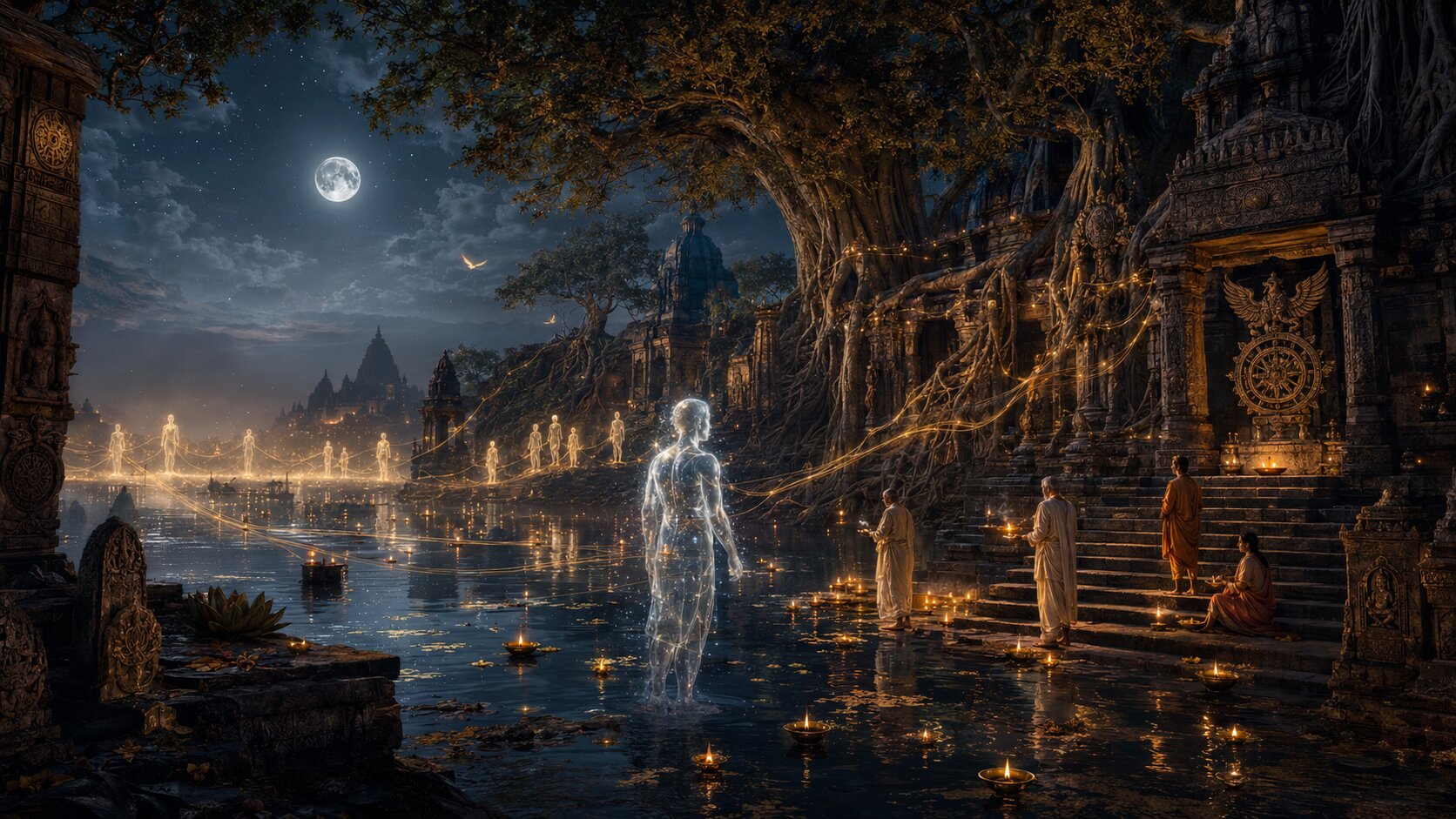
One of the most chilling sections of the Purana explains the creation of Pretas — restless, earthbound spirits trapped in a state of suspended animation. If a person dies suddenly with intense, unfulfilled desires, or if their funeral rites are neglected, the soul fails to cross the River Vaitarani. Trapped between the physical and subtle worlds, Pretas suffer from severe hunger and thirst but lack the material organs to consume anything. They remain anchored to earthly spaces, serving as a cautionary warning about the dangers of extreme psychological attachment to the material world.
8. Shraddha: Empowering the Lineage
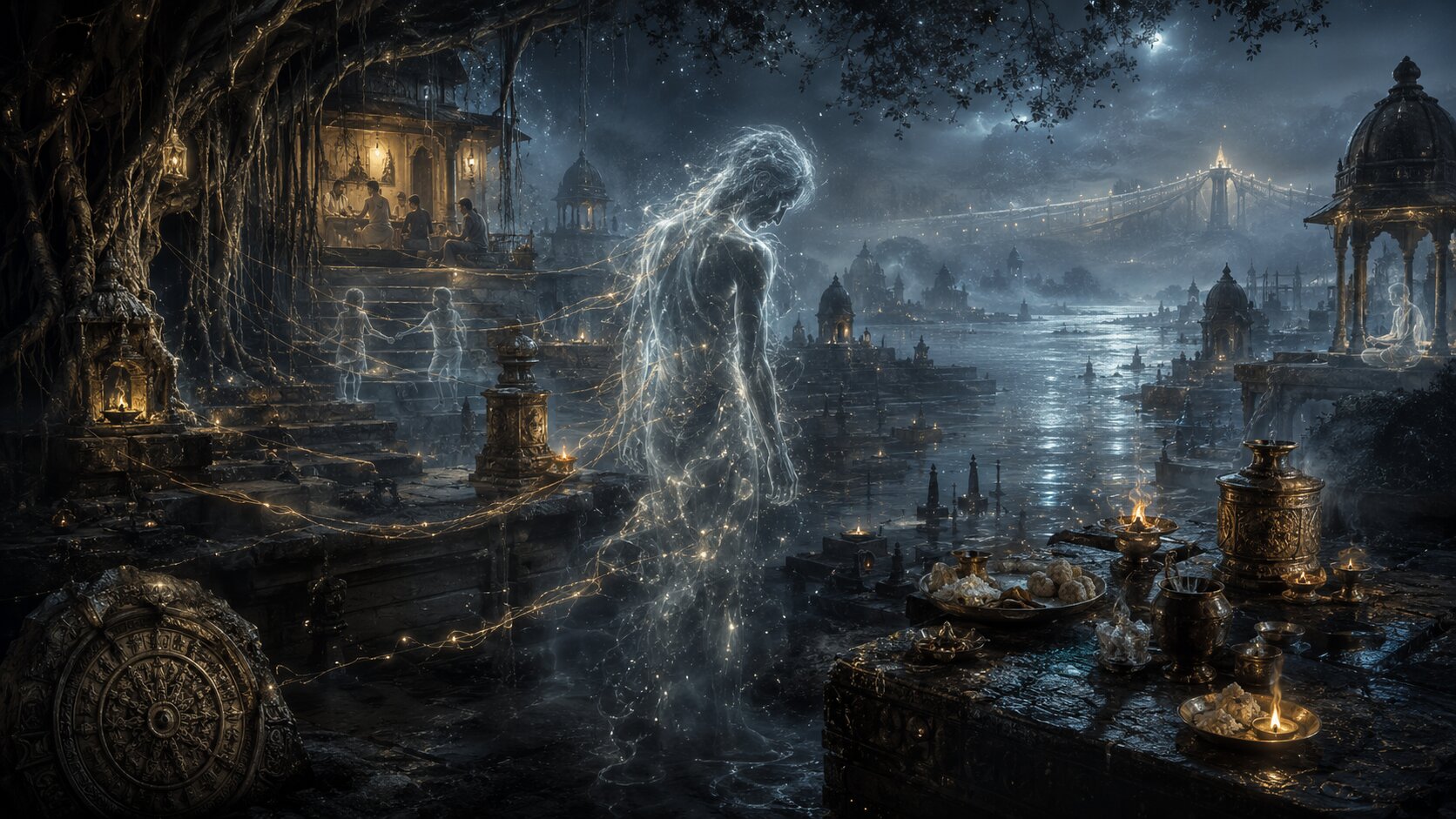
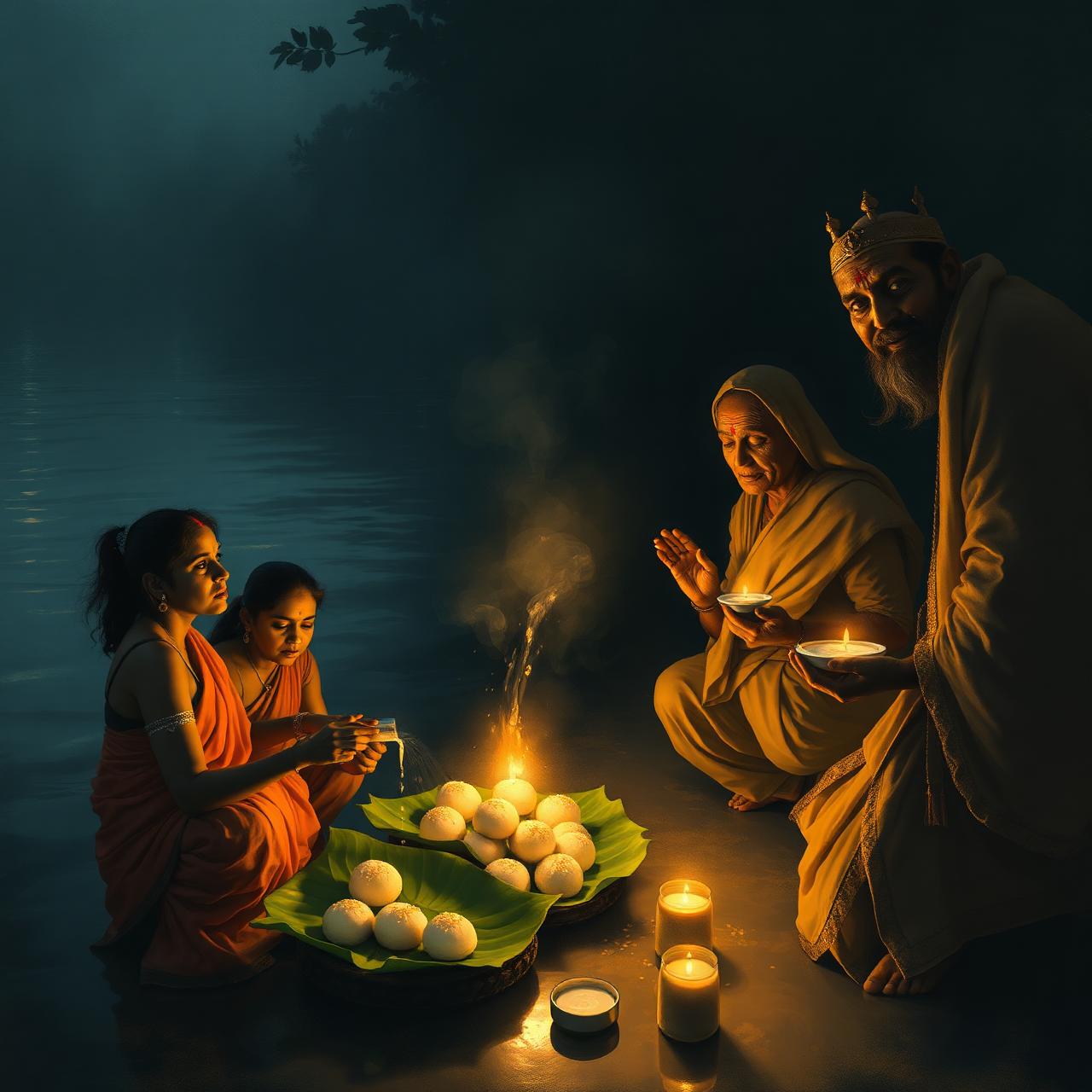
To prevent souls from falling into the lower astral traps or becoming Pretas, the Garuda Purana places immense emphasis on Shraddha — sacred post-death rituals performed by surviving family members. The text explains that the offerings of rice balls (pindas), water, and prayers provide vital energetic nourishment to the subtle body of the deceased. This spiritual fuel grants the soul the strength needed to navigate the dangerous afterlife pathways. It highlights a profound cosmic interconnectedness, showing how the actions of the living can directly alleviate the suffering of their ancestors.
Evolution and the Ultimate Goal
9. The Endless Wheel of Rebirth and Karma
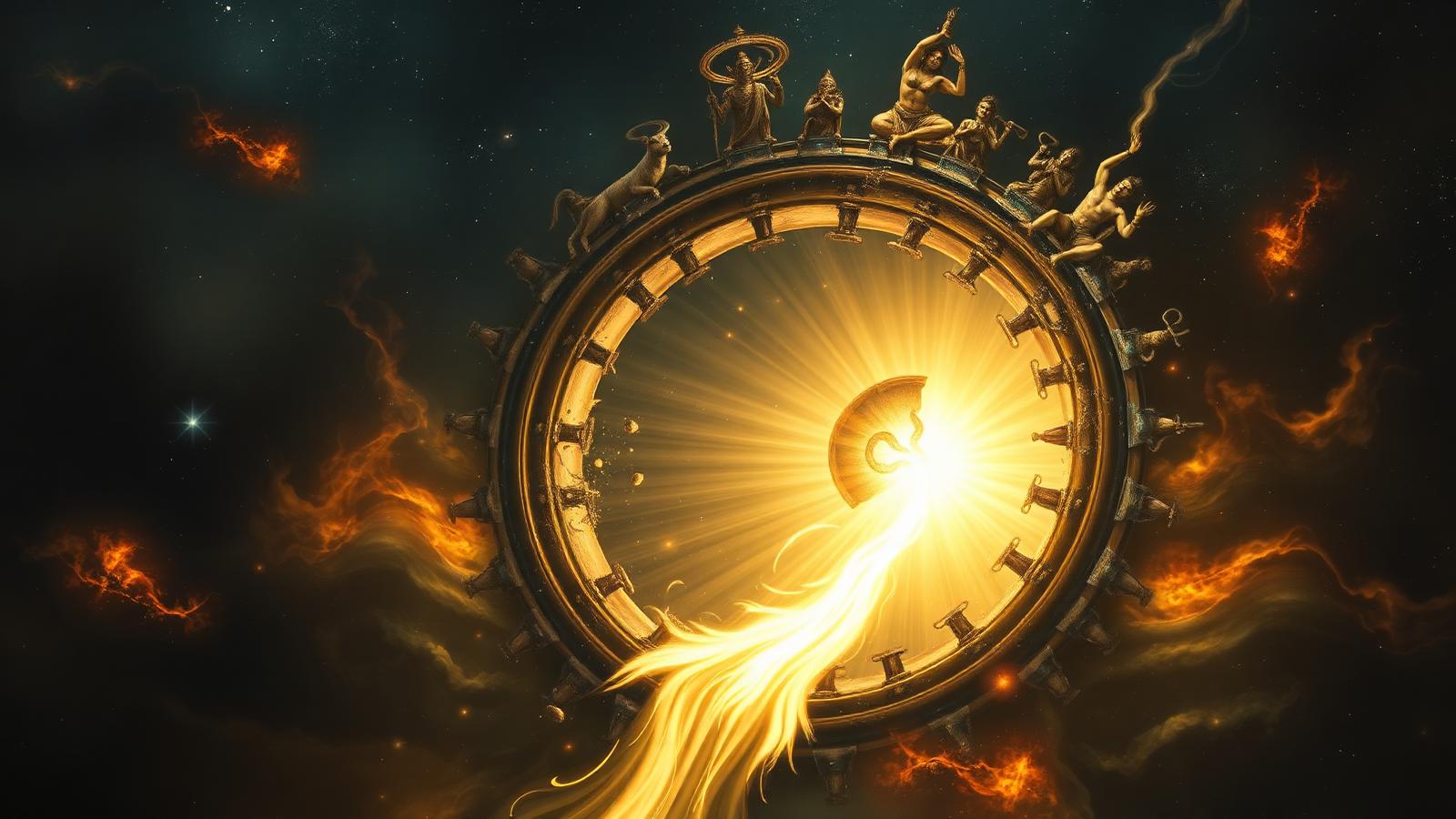
Central to the entire Purana is the grand mechanism of Samsara — the continuous cycle of birth, death, and rebirth driven entirely by Karma. Once a soul has completed its review in the court of Yama and experienced its necessary corrections, it is guided back toward the physical plane. The text explains how the precise nature of one's next incarnation — whether as a human, an animal, or a plant — is mathematically determined by past actions. This framework frames life not as a random series of events, but as a highly sophisticated, self-correcting school for the evolution of consciousness.

10. Moksha: Banishment of the Cycle
The final, crowning mystery of the Garuda Purana shifts its focus away from death and judgment toward absolute liberation: Moksha. Lord Vishnu explains that while navigating the afterlife and securing a favorable rebirth is important, the ultimate goal of human existence is to shatter the wheel of Samsara entirely. By attaining self-realization, practicing unattached devotion (Bhakti), and acquiring divine wisdom, a soul completely dissolves its karmic ties. Free from the dualities of pleasure and pain, the consciousness exits the cycle of death altogether, merging back into the eternal, primordial light of the Divine.